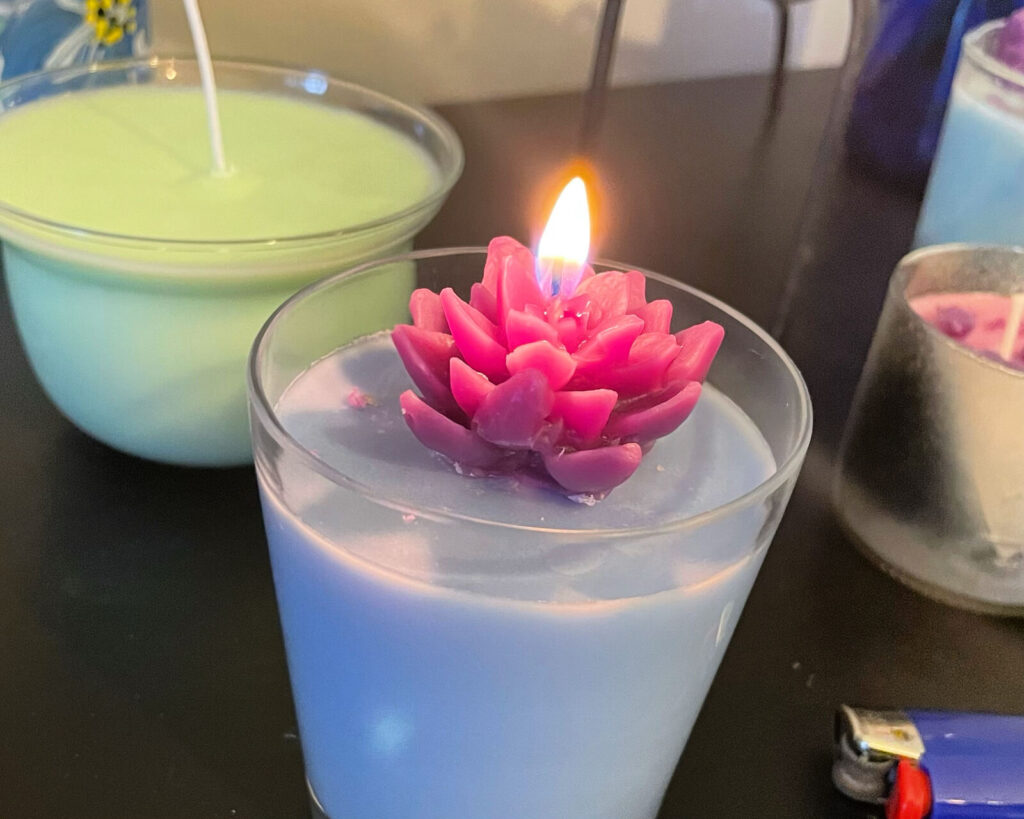
Tins or glass, your names, your date, your colors, in a quantity that matches the guest list. The label’s the part people keep.
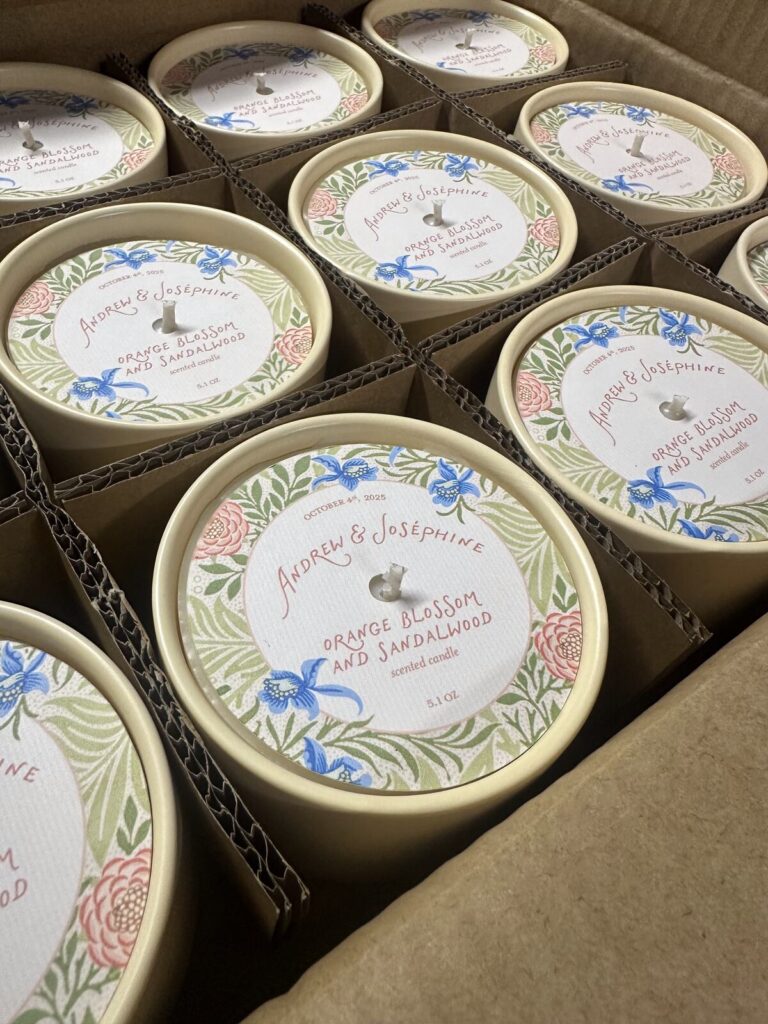
Tins with custom floral labels — Andrew & Josephine, October 2025.
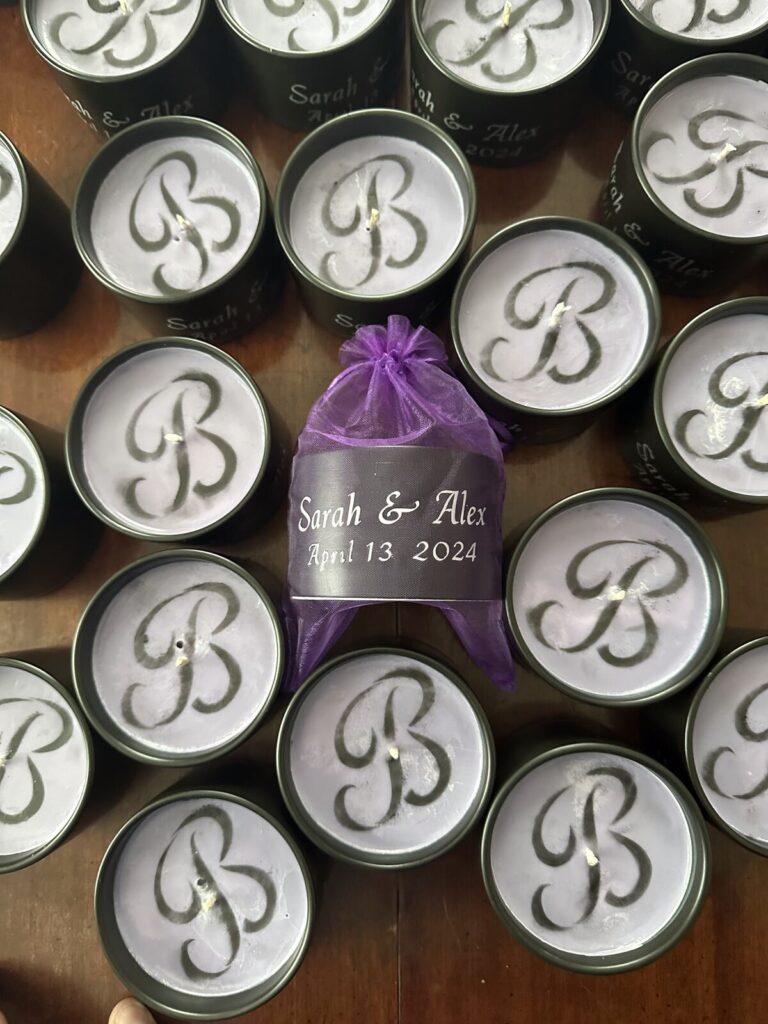
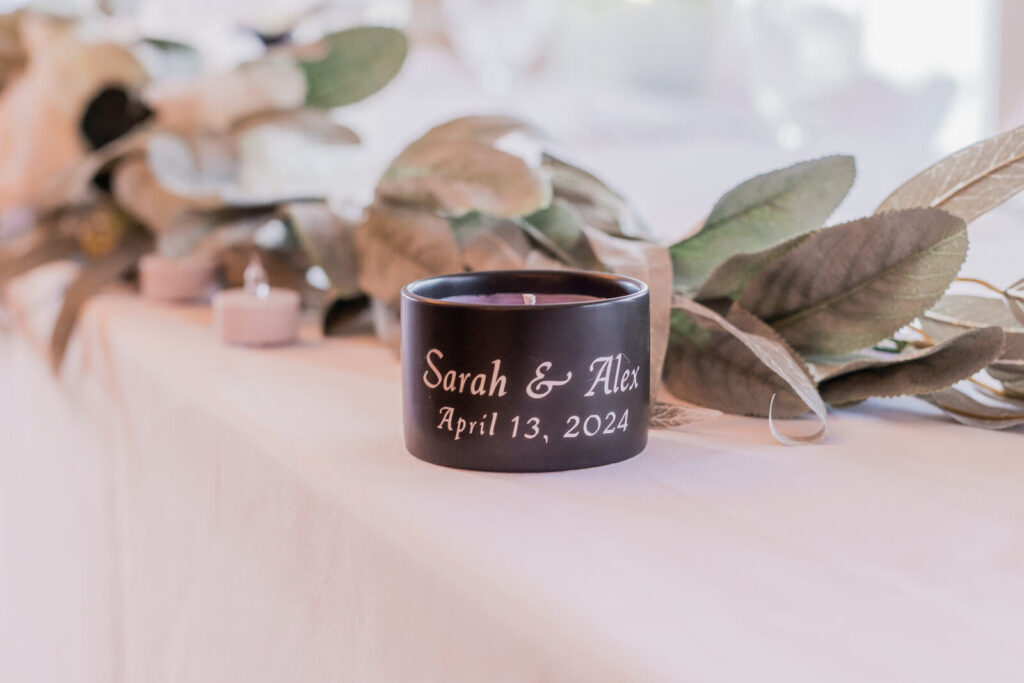
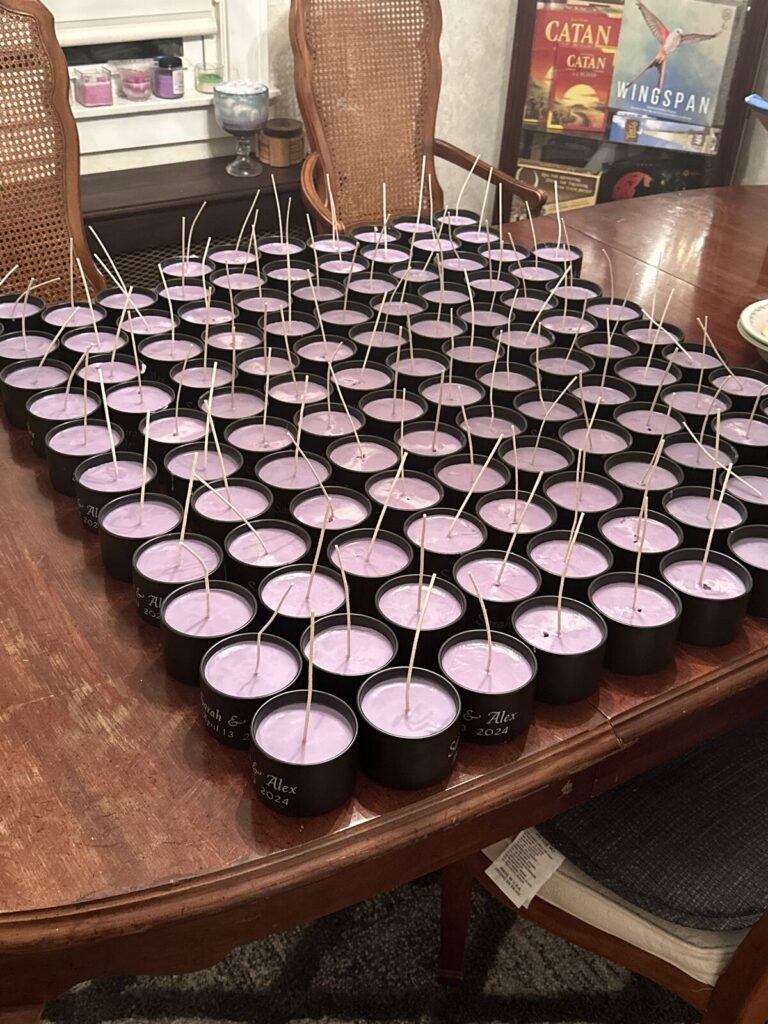
Monogrammed tins and organza bags — Sarah & Alex, April 2024.
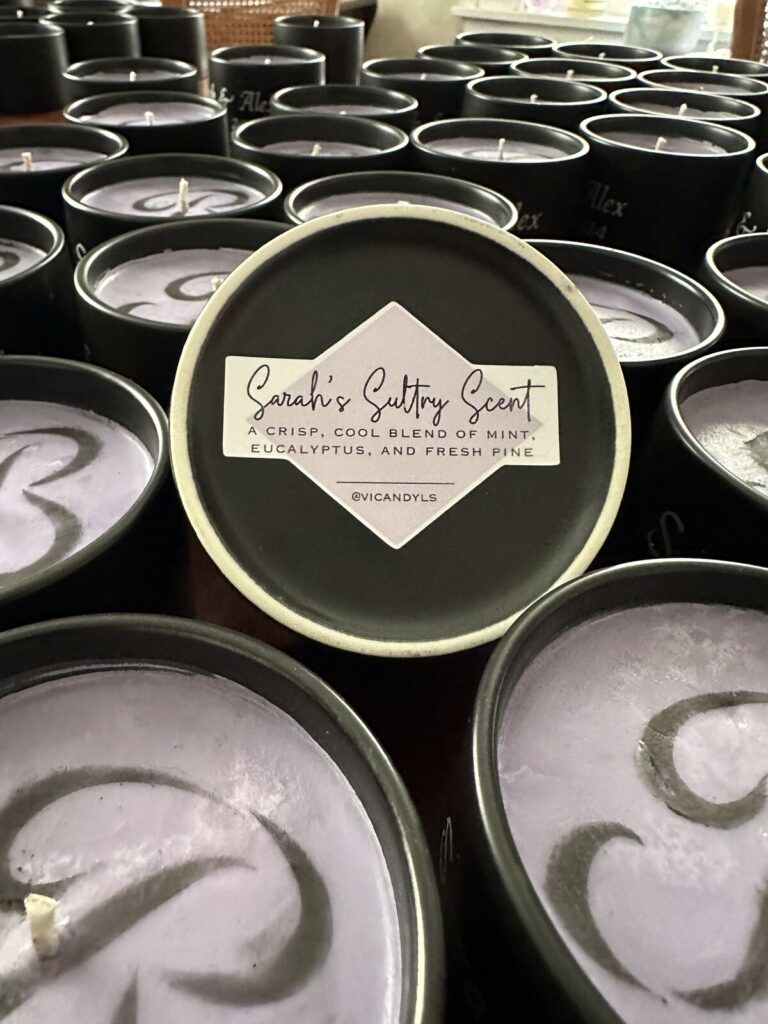
Scents get named after the person they're for.
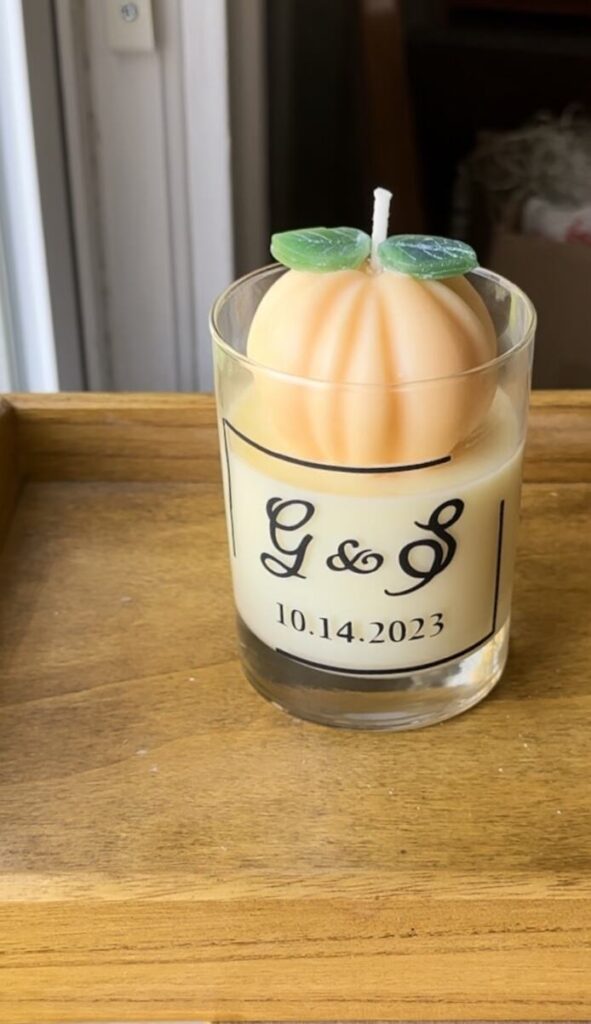
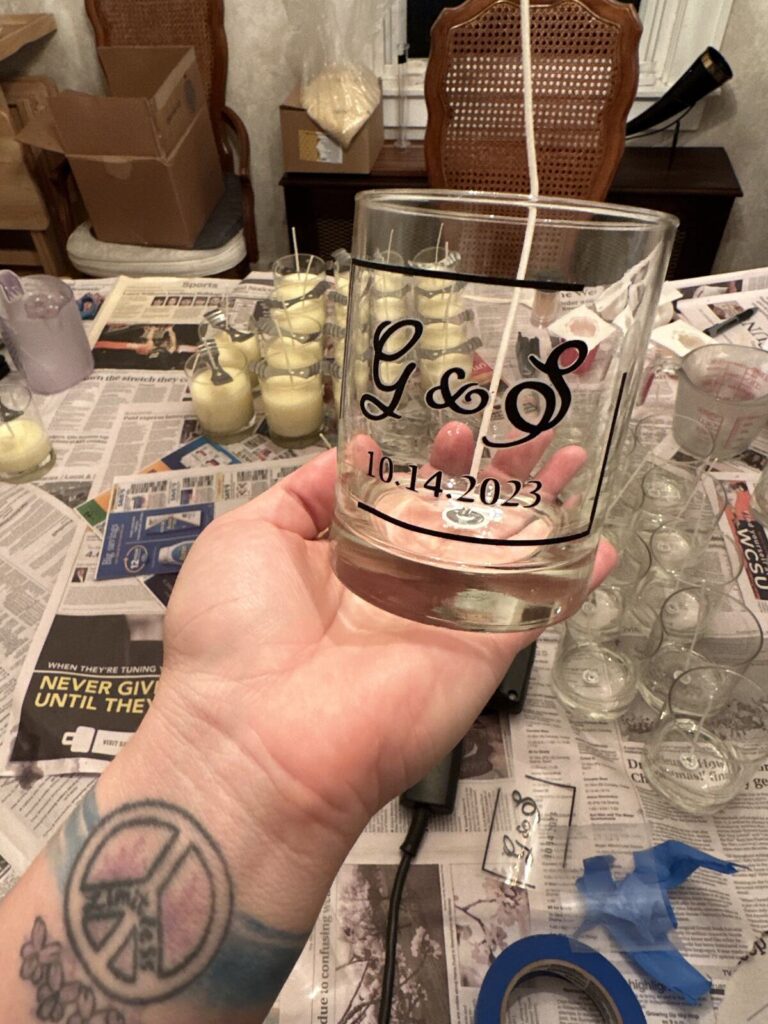
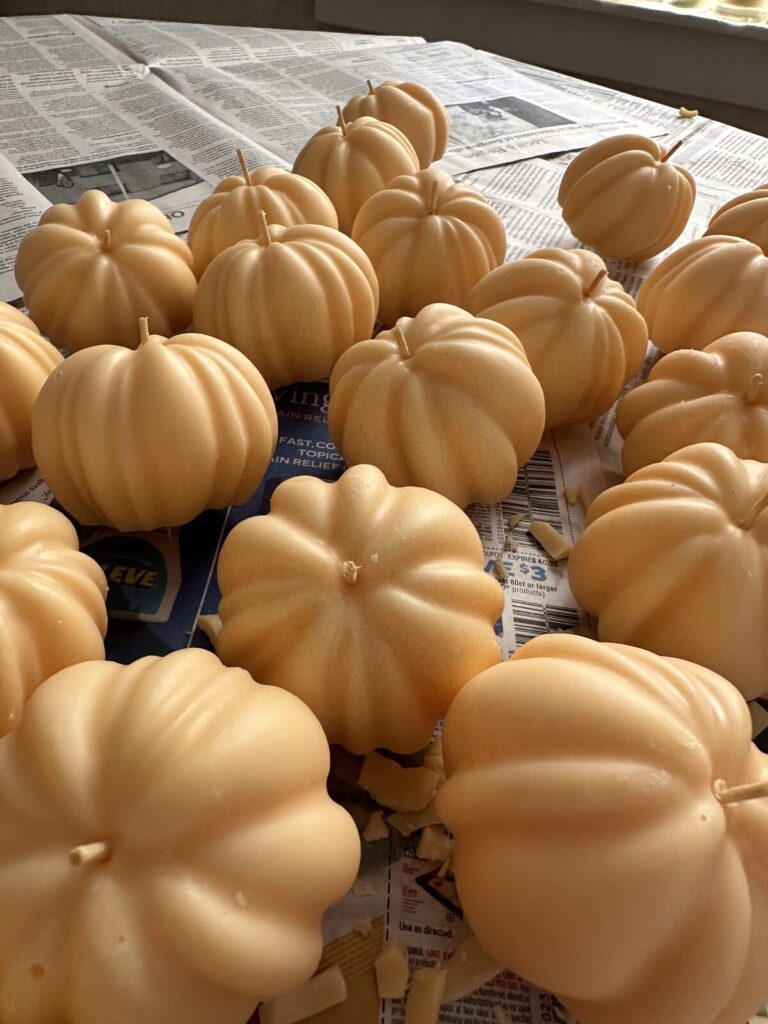
A pumpkin pour in glass — G & J, October 2023.
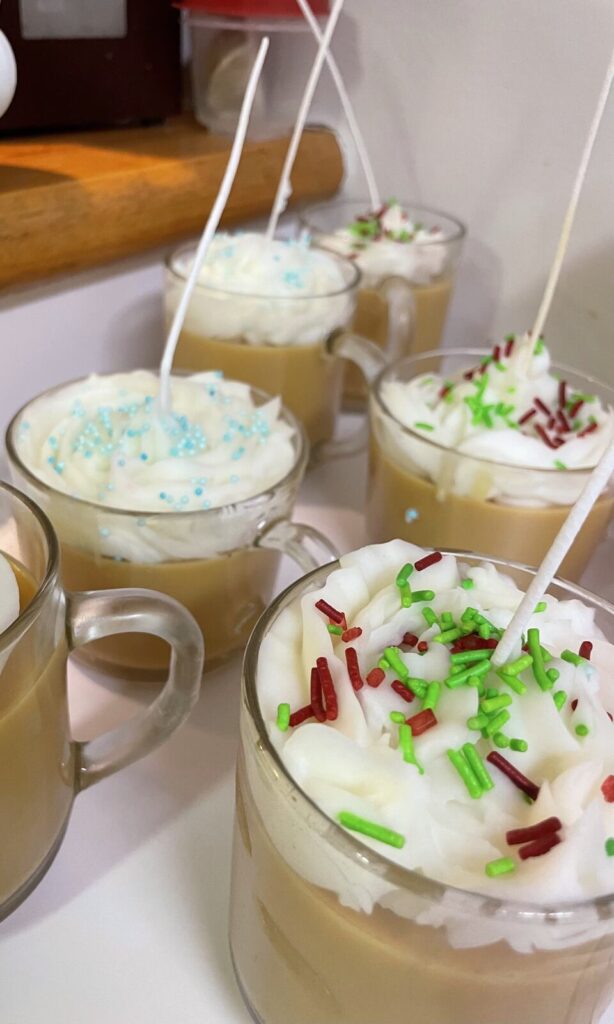
Hot cocoa candles, whipped wax and sprinkles.
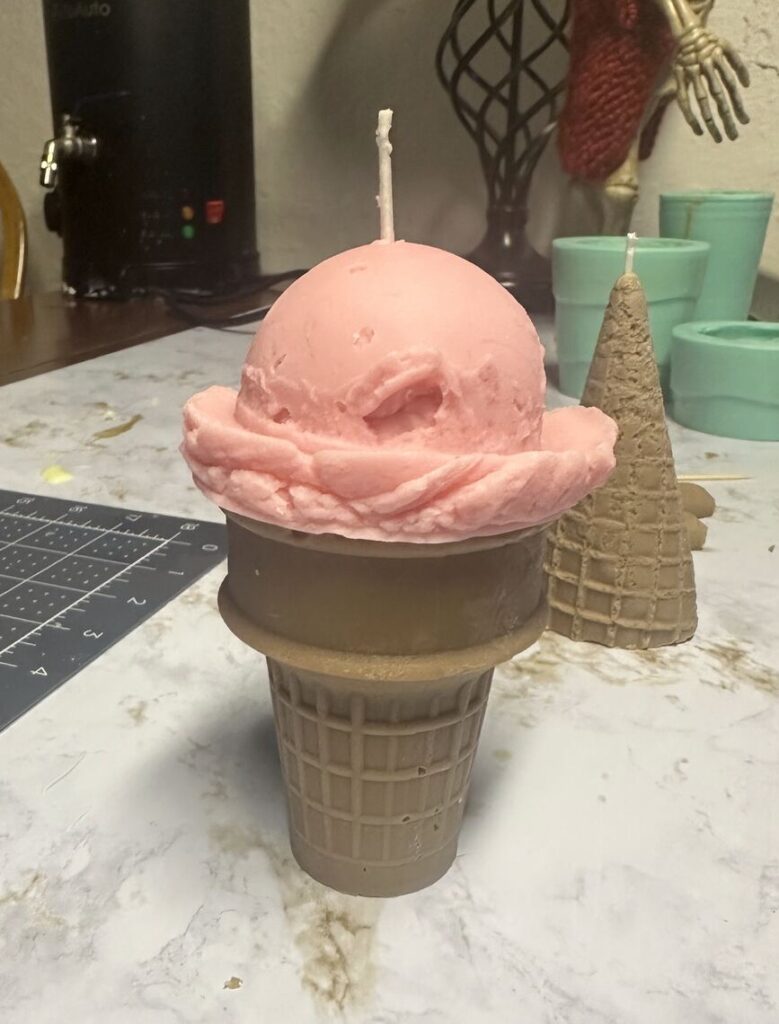
A scoop of ice cream that is actually a candle.
A vessel doubling as a place setting.
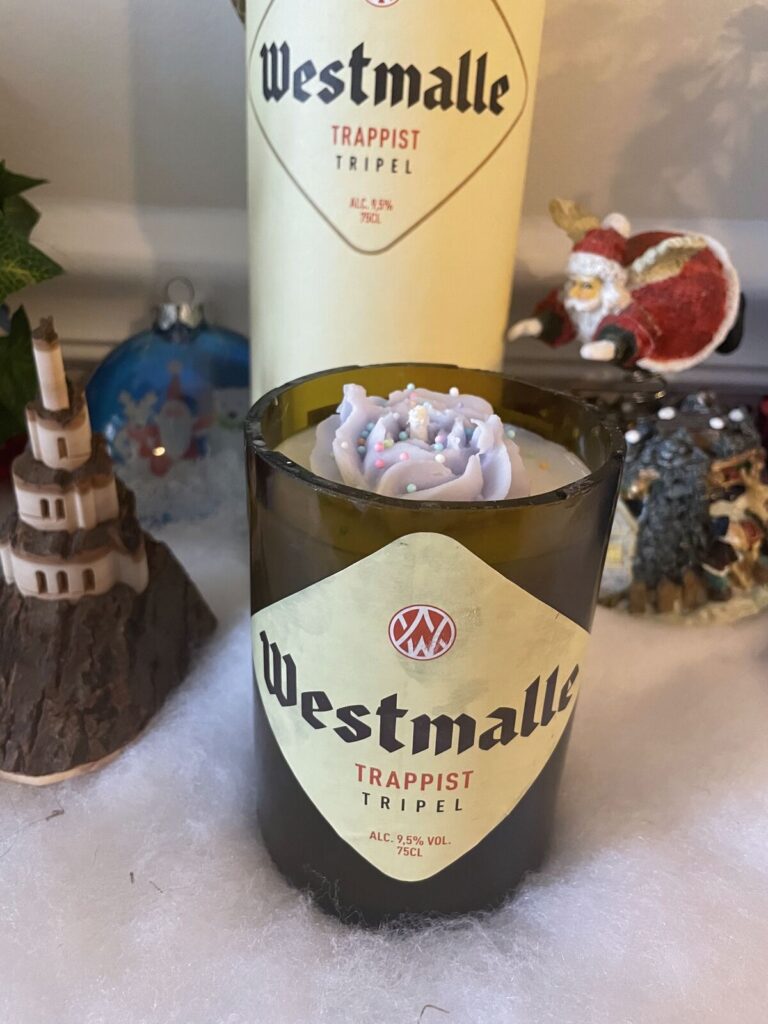
A candle poured into a cut-down beer bottle.
Glass candle, checked over the newspaper it was poured on.
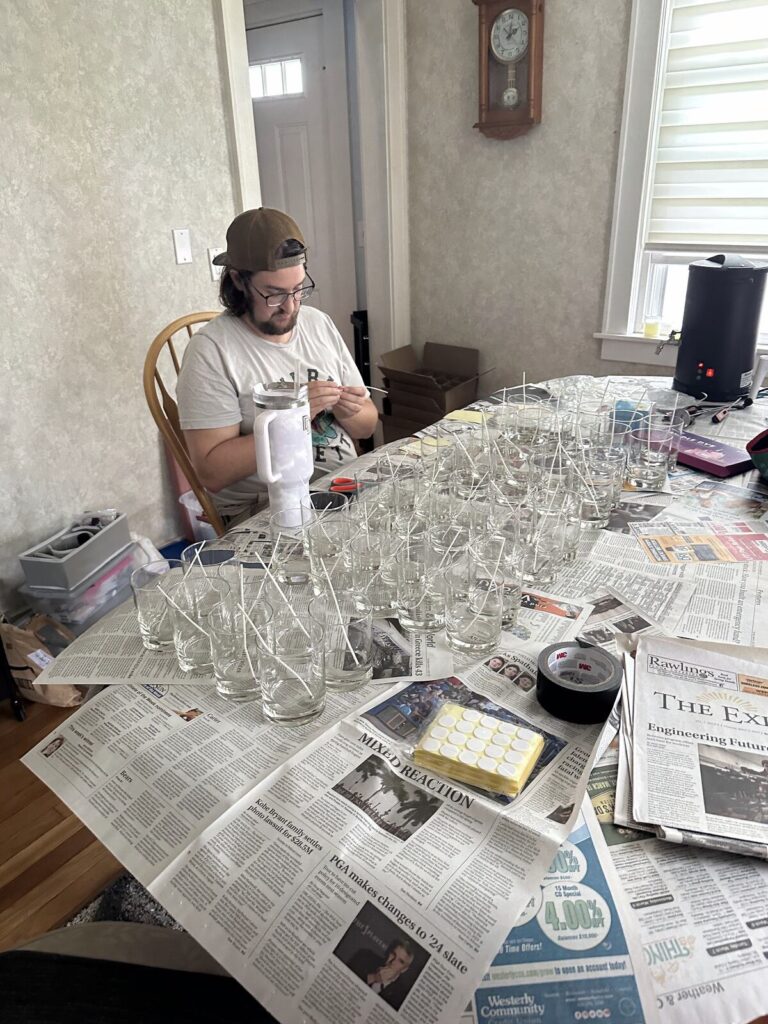
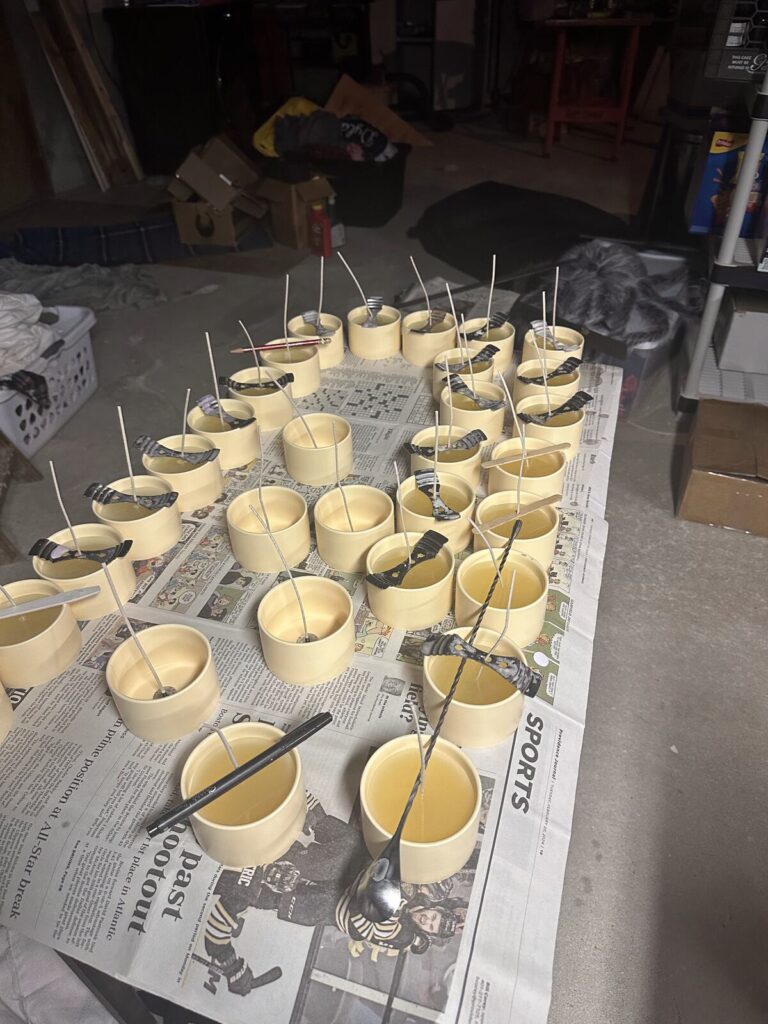
Setting a wick, over the same newspaper.
A batch drying on the table.
Available right now
Something’s setting.
There’s nothing off the shelf right now. New batches are coming, and when there is finished stock it will be listed here with scents, sizes and prices.
In the meantime, candles are made to order. Tell us the occasion, the rough quantity and the date, and we’ll come back with a real number.